
Fullup - The connected gauge for your oil tank
My experience with the Fullup oil tank gauge, updated in October 2026: wireless dropouts, a broken Home Assistant integration and an announced subscription.
Update — October 2026
Since my first review, I’ve become seriously disappointed. I keep losing the wireless connection even though the receiver is no more than five metres away, with just one wall in between. My Home Assistant integration no longer works either.
I’ve also received notice of a €24 annual subscription, including VAT, to keep accessing the readings. Given the price of the hardware, I find that excessive. Having to pay extra to retain that access leaves a bitter taste.
Original article — July 2025
When we bought our house, we faced an unexpected problem: keeping track of our oil level. Indeed, our tank is buried and does not have a gauge. So, we had to measure the remaining level manually, the old-fashioned way. And we found ourselves in an awkward situation more than once…
While searching for a solution, I came across the sensor Fullup and since then, we always keep an eye on the level of our tank.
How does it work?

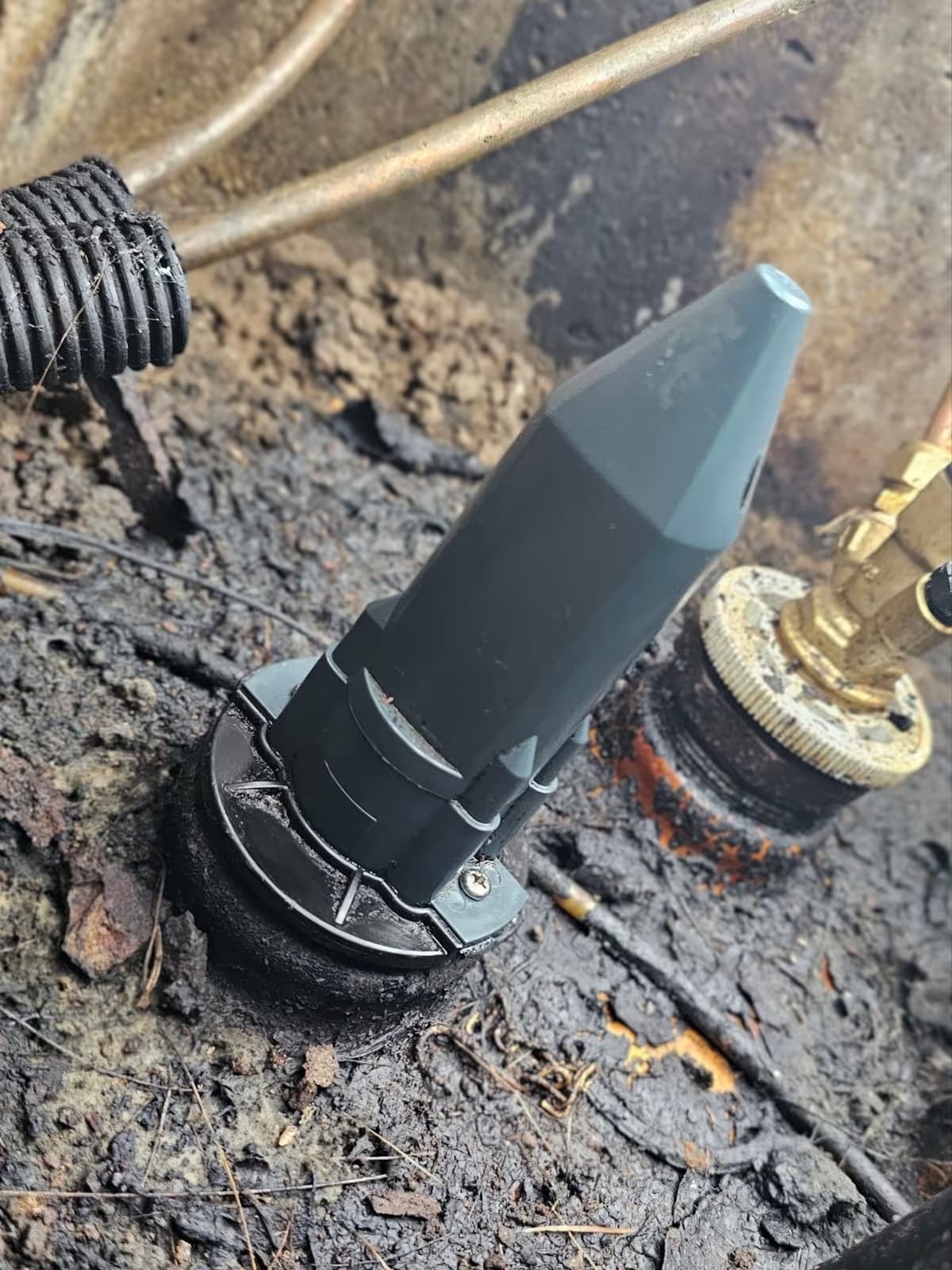
The gauge is an ultrasonic sensor that emits ultrasound waves to measure the distance between the sensor and the liquid level in the tank. It takes this measurement every hour. The sensor itself communicates via radio frequency to a box, which is connected to the home's Ethernet network. The measurement data is then exchanged with the Fullup cloud.
Once the sensor is placed, it needs to be synchronized with your Fullup account. During your initial setup, you must enter the dimensions of your tank, which will allow the system to deduce the amount of oil detected.
The app and the dashboard
Once everything is set up, you have the option to:
- Check the current level of your oil tank
- Review your consumption—daily, weekly, monthly
- Create notifications when your tank reaches a certain level
I must admit that this is where it falls a bit short; probably for simplicity in development, they use the same interface for the mobile app as for the web version.


Overall, it's quite simple and effective, straightforward, and without any additional features.
A multi-management system and direct connection with your supplier
Indeed, it is possible to monitor and manage multiple gauges for the same account, which means you can manage a fleet of tanks. I think of institutions, municipalities, and social landlords that need to monitor and track the oil levels of public buildings—this is a real plus. It is also possible to provide your supplier's information, and they will be notified when a refill is necessary, allowing them to automate the oil order—another step towards simplified management of your tank.
An outrageous price
The biggest downside remains the price. When I purchased it in 2022, the sensor cost me €150, which seemed quite hefty at the time. Today, it is listed at €397 with no visible changes—neither in hardware nor software. It's hard to understand such an increase.
Can we go further?
For this price, Fullup doesn't even offer home automation integration or more advanced features. Fortunately, they have made a public API available and a (semi) documentation that allows the more resourceful among us to retrieve the desired information. I jumped at the chance to develop my own Home Assistant integration, which I detail further in the dedicated article.
Conclusion
I am completely satisfied with its operation; it visibly consumes little energy and does its job well. At €397, the price is, for me, exaggerated, and I still see no justification for it. I do not understand the positioning or the target audience.
